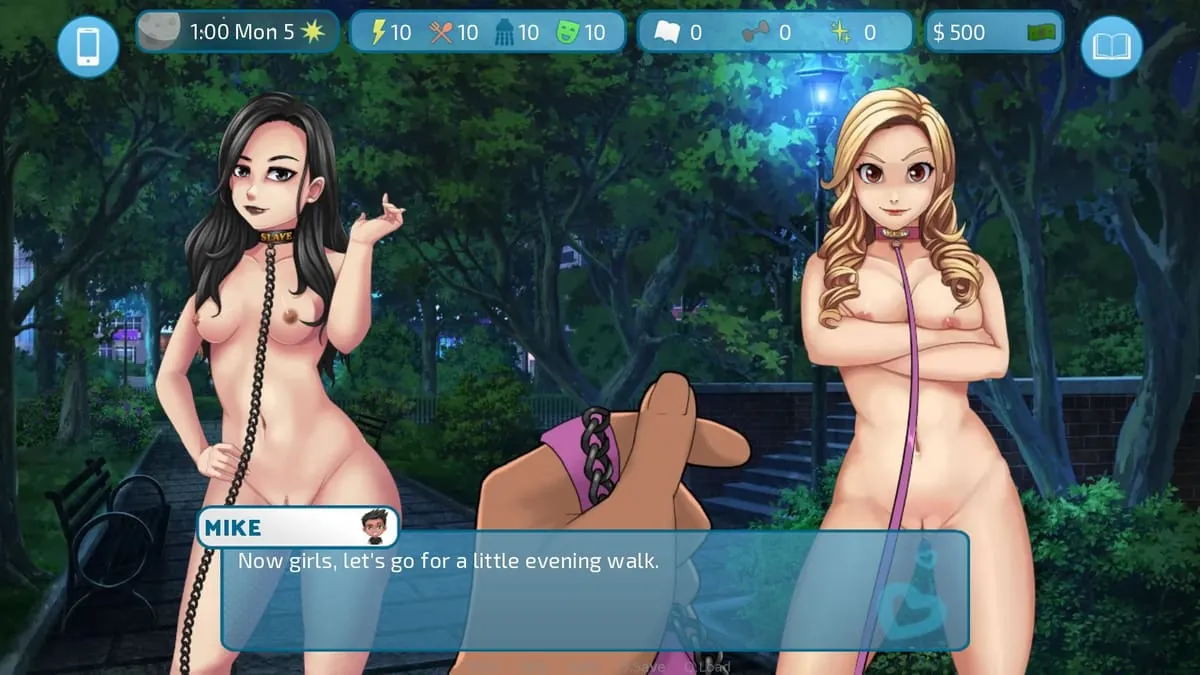
Love and Sex: Second Base Screenshots


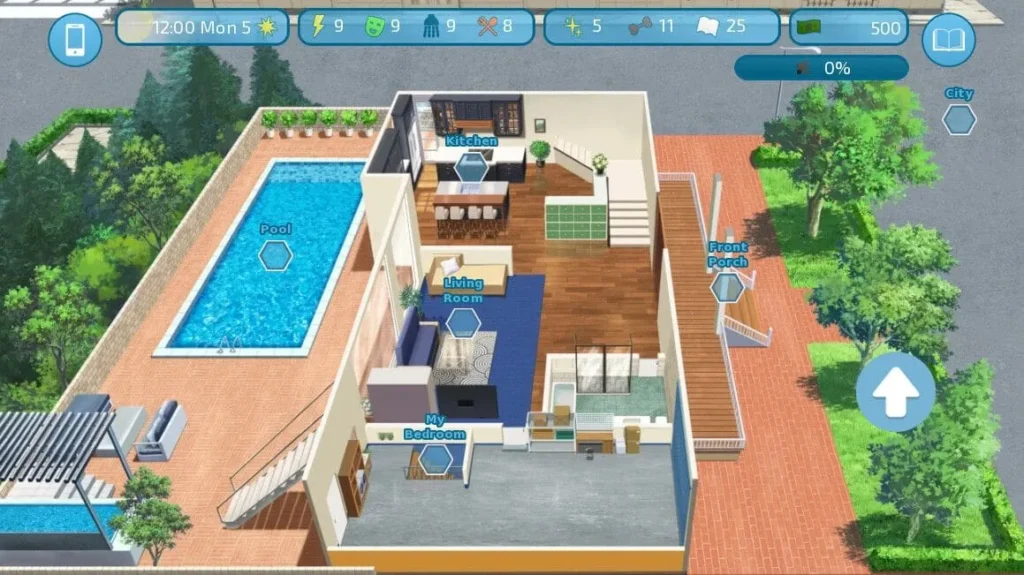


Love and Sex: Second Base review
Master gameplay mechanics, character relationships, and strategic progression
Love and Sex: Second Base is a relationship simulation game that challenges players to navigate complex character interactions, manage multiple statistics, and make meaningful choices that impact gameplay outcomes. Whether you’re new to the game or looking to optimize your playthrough, understanding the core mechanics—from love points and kink progression to date systems and character schedules—is essential for success. This guide covers everything you need to know about building relationships, unlocking content, and achieving your desired endings in this intricate simulation experience.
Understanding Core Game Mechanics and Character Statistics
Ever loaded up a game, hearts aflutter 💘, ready to embark on a digital romance, only to be met with a confusing wall of numbers and hidden rules? You chat, you gift, you… stare at the screen wondering why your charming date just walked away. If that sounds familiar, you’re not alone. Many players dive into Love and Sex: Second Base without a map, leading to missed connections and stalled storylines.
Luckily, cracking the code isn’t as hard as it seems. This game mechanics guide is your personal decoder ring 🗝️. We’re going to break down the three magic numbers that govern every relationship, explain how to work with the game’s clock, and turn you from a confused newcomer into a master of digital courtship. By understanding the core Love and Sex: Second Base statistics and systems, you’ll stop guessing and start strategically building the relationships you want.
How Character Statistics Work in Gameplay
At the heart of every interaction in Love and Sex: Second Base are three pivotal stats. Think of them as the vital signs of your relationship with each character. They’re invisible on the surface but control everything beneath it. Mastering these numbers is the absolute key to progressing from shy glances to, well, rounding second base and beyond.
The trio consists of Love Points (LP), Kink Points (KP), and Lesbian Points (GP for Girl Points). Each character has their own unique set of these values, and they track different aspects of your connection. Unlike some games where a single “affection” meter rules all, this trio allows for nuanced relationship development. You can be deeply in love (high LP) but still have a vanilla relationship (low KP), or be kink-compatible without a deep emotional bond.
Here’s a quick breakdown of what each stat represents in your game mechanics guide:
| Statistic | What It Controls | Typical Range & Impact |
|---|---|---|
| Love Points (LP) | The emotional, romantic connection. This is the foundation for serious relationships, commitment, and unlocking key story events. | 0-100. Major story beats are often gated behind thresholds like 40, 75, or 85 LP. |
| Kink Points (KP) | The willingness to explore more intimate, adventurous, or fetish-related content. Higher KP unlocks new actions and dialogue options during private time. | 0-100. Increases more slowly than LP and is crucial for accessing the game’s more mature content paths. |
| Lesbian Points (GP) | Exclusively for female characters, this measures their interest in same-sex relationships with the protagonist (if she is female). | 0-100. Governs the availability of romantic and intimate actions between female characters. |
I remember first playing and focusing only on LP, wondering why my options with certain characters felt locked. I’d have 80 LP but still get turned down for anything beyond basic intimacy. That was my first lesson in KP! The character love points system gets your foot in the door, but kink points progression is what opens up the entire house 🏠. They work in tandem, and neglecting one can leave your relationship feeling one-dimensional.
Managing Love Points, Kink Points, and Lesbian Points
So, how do you actually move these numbers? This is where the dating system gameplay gets strategic. It’s not just about spamming the same “nice” action over and over.
Building Love Points (LP): The Heart of the Matter ❤️
LP is your primary currency for emotional progression. You earn it through successful social interactions: engaging in positive conversations, giving liked gifts, and most importantly, going on successful dates. Each character has preferred “date actions” that fill the hidden “datebar” more quickly. A full datebar at the end of your time together grants a big chunk of LP. The key is observation. Does she love when you choose the romantic walk in the park? Does he prefer the witty banter at the bar? Picking the right actions accelerates your character love points system growth dramatically.
Pro Tip: Pay close attention to character bios and early dialogue. They often drop hints about personalities and preferences, which directly correlate to which date actions are most effective.
Unlocking Desires with Kink Points (KP): 🔓
KP progression is subtler. It grows through successful intimate encounters and by choosing flirtier, more adventurous dialogue options when the opportunity arises. It’s a stat built on comfort and trust, which is why it’s often slower to increase. You can’t jump straight to high-KP actions; you need to build up to them. The game brilliantly ties this to narrative—as you grow closer (high LP), a character becomes more open to exploring their desires (increasing KP). Reaching certain KP milestones is often the prerequisite for specific story events or intimate scenes, making kink points progression a core strategic goal.
Navigating Same-Sex Dynamics with Lesbian Points (GP):
For players pursuing female-female relationships, GP is your dedicated track. It increases through romantic and intimate actions specifically between the female characters. It functions similarly to LP but on a separate axis, acknowledging that attraction and comfort in same-sex dynamics develop independently. Managing GP is essential for following those particular relationship paths to their full conclusion.
The magic—and the challenge—lies in balancing these stats. Your choices actively steer the relationship. Are you pushing for a deep emotional commitment by maximizing LP? Or are you fostering a more physically adventurous connection by focusing on KP? The game doesn’t judge, but it does remember. Your management of these Love and Sex: Second Base statistics directly determines which of the two major relationship paths you’ll end up on: the committed, long-term path (often leading to themes of stable partnership) or the more casual, break-up path.
Time Management and In-Game Scheduling Systems
If the three stats are the engine of your relationships, then time is the fuel. And in this game, fuel is limited ⏳. This is arguably the most crucial skill to master: time management strategy. The game world operates on a persistent clock where every action—from working out to chatting on the phone—consumes precious hours. You can’t do everything in one day, so planning is paramount.
The core loop revolves around 6-hour date windows. You can schedule one major date block per day (e.g., 14:00-20:00 or 20:00-02:00). This is your primary relationship-building time. Outside of these windows, you need to manage your character’s life: improving your own stats (like strength or charisma), earning money, and taking care of needs. This creates a constant, engaging trade-off. Do you spend the afternoon grinding at the gym to look better for future dates, or do you call that special someone for a quick LP boost?
This is further complicated by the brilliant character schedule system. Characters aren’t just sitting around waiting for your call! They have jobs, classes, and routines. Missy might be available at the cafe in the afternoon, but she’s at her pole dancing class in the evenings. You must learn their routines. The in-game phone is your best friend here 📱. Use it to check where someone is before you travel, invite them to dates (which respects their schedule—you can’t invite someone to a date during their work hours!), and send flirty or friendly messages for small stat boosts.
Here’s a breakdown of common time blocks and what they often mean for your dating system gameplay:
- Morning (06:00 – 12:00): Often used for self-improvement. Hit the gym, study at the library, or work a shift. Some characters may be at school or their morning job.
- Afternoon (12:00 – 18:00): A prime time for social activities and dates. Many characters are free. Specific events or locations (like the beach) may only be accessible now.
- Evening/Night (18:00 – 03:00): The classic date period. This is when most intimate, dinner, or party-related activities occur. Many KP-gaining actions are only available during the late-night block (20:00-03:00). This is also when characters might be at their unique jobs (like bartending).
Forget to manage your time, and you’ll find yourself with great stats but no in-game days left to use them on a date. An effective time management strategy involves looking at the weekly schedule: “Okay, on Tuesday afternoons, both characters I’m interested in are free. I need to boost my Charisma on Monday to be ready for those dates.”
Ultimately, Love and Sex: Second Base is a brilliant juggling act. You’re balancing three different relationship currencies across a roster of characters with independent lives, all while the clock is always ticking. It might seem daunting, but that’s what makes it so rewarding. When you finally align a character’s schedule, hit the right LP threshold to unlock a special event, and have the KP required to see it through, it feels like a genuine achievement. You’re not just clicking through a story; you’re strategically engineering a digital romance. So study those schedules, mind those numbers, and get ready to master the delicate, rewarding dance of the game’s core mechanics. Your perfect save file awaits
Love and Sex: Second Base offers a deep and complex simulation experience that rewards careful planning and strategic decision-making. By mastering the character statistics system, understanding date mechanics, and learning how to effectively use gifts and interactions, you can unlock the full range of content the game offers. Whether you’re pursuing marriage, exploring multiple relationships, or simply trying to achieve specific character interactions, the systems outlined in this guide provide the foundation for success. Remember that each character has unique preferences and schedules, so adapting your approach to individual personalities is key to achieving your desired outcomes. Take time to experiment with different strategies, pay attention to character reactions, and enjoy the intricate web of relationships that makes this simulation game engaging and replayable.